
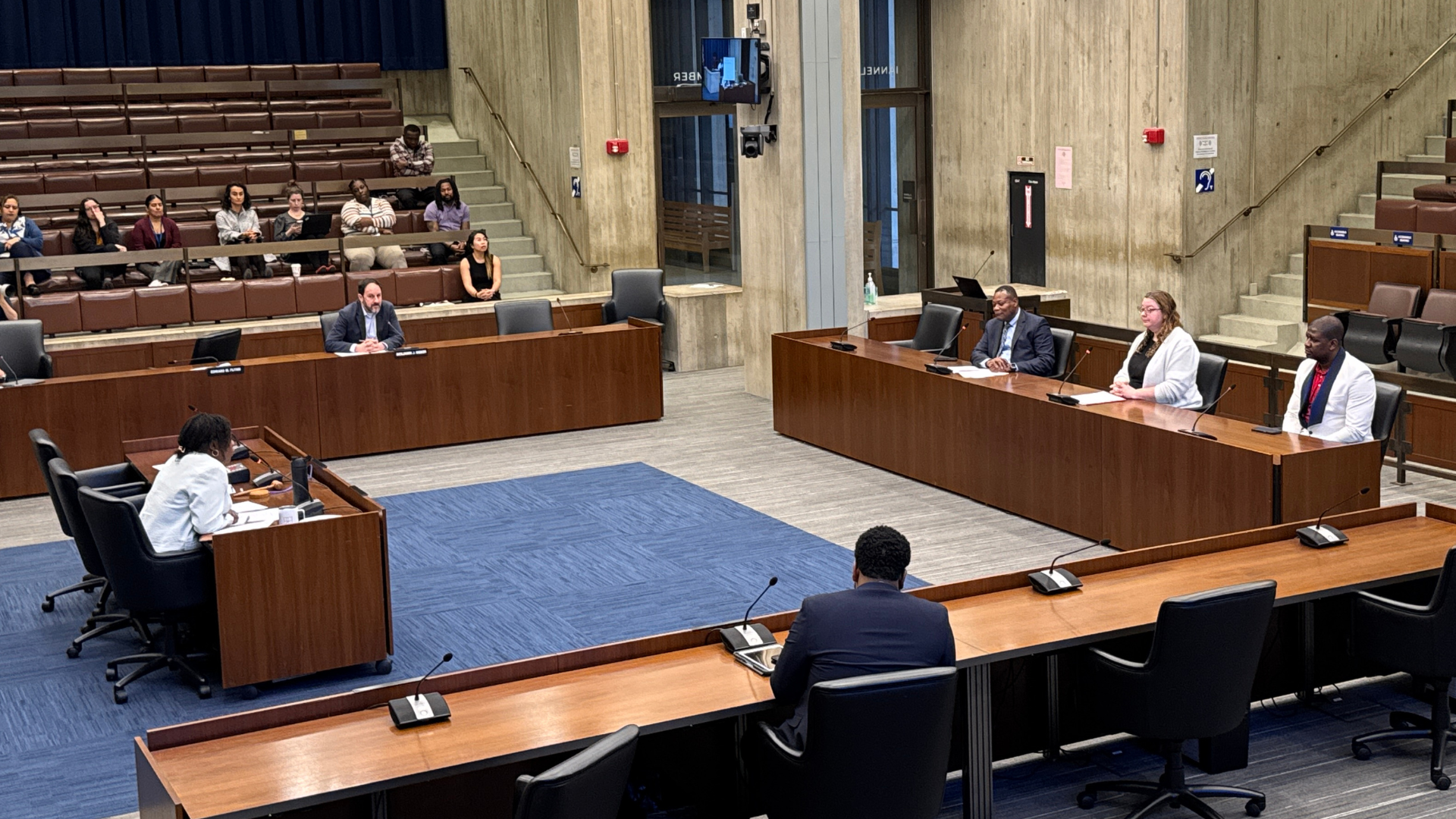
Boston City Council hearing on April 9, 2026 discussing the termination of federal protected status for Haitian immigrants and examining the City’s response to protect affected residents
Hundreds of thousands of Haitians living in the United States are facing a critical moment, as Congress moves toward a floor vote on legislation that would protect their ability to remain in the country they call home.
What Is TPS?
Temporary Protected Status (TPS) is a federal designation that allows people from countries experiencing armed conflict, natural disasters, or other extraordinary conditions to live and work legally in the United States. Many Haitians have relied on TPS for decades as a protection from deportation and a pathway to work authorization. They are parents, workers, caregivers, faith leaders, and business owners, deeply rooted in communities across Massachusetts and the country.
Ending TPS would leave over 350,000 Haitian nationals at risk of deportation. The Trump administration moved to terminate TPS for Haiti in 2025. Courts have temporarily blocked that termination, with one district court citing evidence of racial animus in the administration’s decision-making. The Supreme Court has agreed to take up the case and is expected to rule in late June or early July.
A Historic Legislative Breakthrough
On March 28, Congresswoman Ayanna Pressley’s discharge petition to force a House vote on extending TPS for Haiti successfully met the 218-signature threshold, moving forward with bipartisan support. A discharge petition is a rarely successful procedural tool that allows members of Congress to bypass House leadership and bring a bill directly to the floor. This was the first time an immigration-related discharge petition had ever reached 218 signatures.
The petition will compel a vote on H.R. 1689, a bipartisan bill that would require the Department of Homeland Security to designate Haiti for TPS, protecting Haitians from deportation and keeping them eligible for work authorization through January 20, 2029. The vote could happen as early as next week.
Congresswoman Pressley, who serves as Co-Chair of the House Haiti Caucus and represents one of the largest Haitian diaspora communities in the country, described the petition’s success as “a testament to our collective organizing and the strength of our broad, diverse movement.”
Boston Rises to the Occasion
Yesterday the Boston City Council met with community leaders and advocates to ask what they could do to support communities impacted by the threat of TPS for Haiti termination, which in itself has pre-emptively caused many to lose their jobs or be denied renewals of work-related documents, creating not only an environment of stress and fear for many, but also making it impossible for some to pay their mortgage or rent and meet other basic needs.
Led by Councilor Ruthzee Louijeune, 2 panels convened to discuss supporting the expansion of access to legal aid, making employers aware that they are not allowed to discriminate against those with TPS in anticipation of its potential termination, and supporting community-based mutual aid efforts to assist those who are already struggling financially as a result.
You can watch the recorded hearing here
The Situation in Haiti
The administration has argued that conditions in Haiti have improved sufficiently to justify ending TPS. The evidence does not support that claim. Haiti’s transitional government has expired with no succession plan, and the country is facing an escalating security crisis driven by heavily armed gangs that have expanded well beyond the capital. According to the UN, 6.4 million people are currently in need of humanitarian assistance – a level approaching what was recorded in the aftermath of the 2010 earthquake. More than 5,500 people were killed between March 2025 and January 2026 as gang violence spread into agricultural and rural regions.
Just days before the discharge petition reached its threshold, gangs attacked communities in the Artibonite region, Haiti’s major agricultural area, burning homes and forcing thousands to flee. Amnesty International called the attack “yet another tragedy in a long chain of crimes that the Haitian authorities and the international community have failed to stop,” pointing to the ongoing failure of international security interventions to stem the violence. Haitian human rights defenders, community organizations, and civil society groups have been sounding the alarm and demanding accountability, and their voices must be centered in how the U.S. responds.
Deporting people into that situation – people who have built lives, families, and careers here – would be unconscionable.
What Comes Next
The House floor vote is a critical step, but not the end of the road. The bill would need to pass the Senate as well as the House with veto-proof majorities (as Trump supports terminating TPS for Haiti, and would almost certainly veto the decision) and be signed into law, and the Supreme Court case looms large. The coming weeks will be pivotal.
If you’d like to contact your members of Congress ahead of the vote, Church World Service has a take action tool that makes it easy to reach out.