
News
- A recent poll for the Protecting Immigrant Families coalition shows strong national support for maintaining social safety net programs for lawfully present immigrants, including reversing the cuts made in the One Big Beautiful Bill Act. The poll results also showed opposition to ICE enforcement tactics, including data sharing among federal agencies and enforcement activities at sensitive locations. The Protecting Immigrant Families coalition formed during the first Trump Administration in response to efforts to redefine public charge and has continued to strive to protect access to vital social services needs for our communities.
- Having failed to pass a DHS funding bill before leaving for their 2-week Easter Recess, Congressional leadership is now looking to fund ICE and CBP through the reconciliation process, which would bypass a potential filibuster in the Senate. Prior to the recess, Senate negotiators, with Trump’s blessing, had agreed to fund all agencies within DHS except ICE and CBP, but that agreement was rejected by House Republicans hours before leaving DC. Now, Republican leadership is seeking to sidestep Democratic demands for reforms to the immigration enforcement agencies, through reconciliation, but could face challenges in crafting a package that would be widely accepted within their own party. The current partial shutdown is already the longest in history, having just entered its third month, and there are few indications that it will be resolved any time soon.
- The House will vote Thursday on HR 1689, a bill that would extend TPS for Haiti until 2029. House leadership had refused to bring this bill up for a vote until their hand was forced by Rep. Ayanna Pressley who successfully pushed through a discharge petition and gained the support of a majority of House members. Although passage now looks likely in the House, the bill would still face an uphill battle in the Senate and a probable veto by Trump. The administration’s efforts to strip TPS protections from both Haitians and Syrians will go before the Supreme Court on April 29.
- Following media reports from earlier this year, Treasury Secretary Scott Bessent confirmed that the administration is working on an executive order that would require US banks to collect citizenship information from their customers. Requirements for proving citizenship could prove a major obstacle for many, US citizens included, as earlier news reports indicated that REAL ID compliant licenses would not be acceptable since they do not show citizenship status. The administration has not provided any information on when they might officially propose these changes.
News
Town by town, community by community, Massachusetts residents are making clear what they know to be true: immigrants belong here, and local governments have a role in keeping them safe.
During the first Trump administration, 49 cities and towns passed local measures limiting cooperation with federal immigration enforcement. That momentum hasn’t slowed. Plymouth just voted at Town Meeting to codify ICE restrictions into local policy. In 2024 Boston City Council reaffirmed the Trust Act, originally enacted in 2014. Other examples are Brookline, Cambridge, Lynn, Chelsea, Newton, and Somerville. These aren’t isolated acts – they’re a signal. Massachusetts communities are stepping up, and they’re asking the state to do the same.
Local protections matter. But a patchwork of policies – where your safety depends on which side of a town line you live on – is not enough. Immigrant families – ALL families – deserve consistent, statewide protections.
The good news: you’ve already shown what’s possible. When the Protect Act came before the Massachusetts House, MIRA supporters sent over 1,200 emails to their State Representatives. The bill passed. Now it’s before the Senate – and we need to do it again.
This is the moment for courage over fear. State Senators need to hear from you. They need to see the same appetite for change that’s showing up in communities across this state showing up in their inboxes too.
Can you send an email to your State Senator today? Your message takes two minutes and makes a real difference.
Tell them to pass and strengthen protections for immigrants in Massachusetts →
News
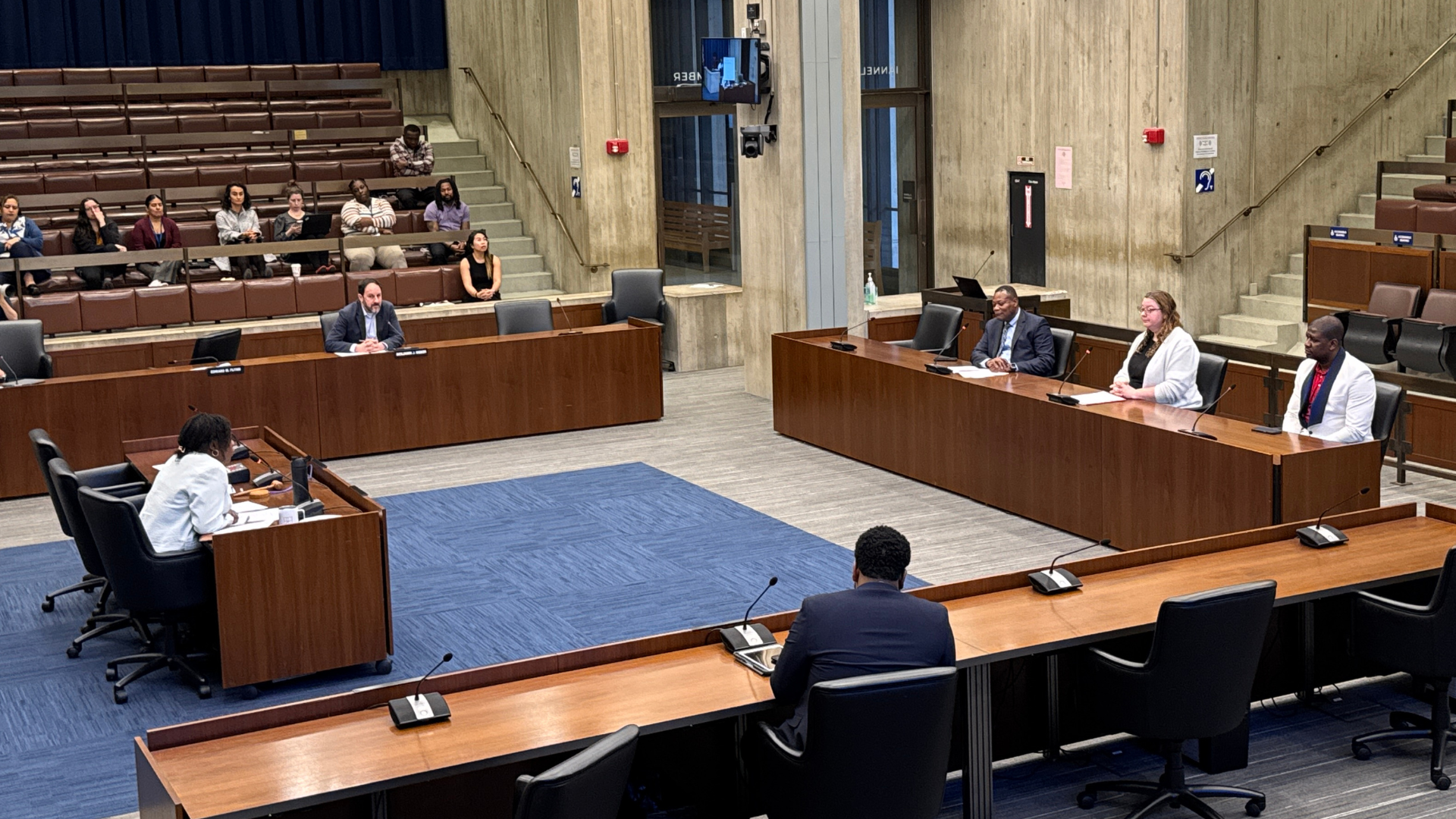
Boston City Council hearing on April 9, 2026 discussing the termination of federal protected status for Haitian immigrants and examining the City’s response to protect affected residents
Hundreds of thousands of Haitians living in the United States are facing a critical moment, as Congress moves toward a floor vote on legislation that would protect their ability to remain in the country they call home.
What Is TPS?
Temporary Protected Status (TPS) is a federal designation that allows people from countries experiencing armed conflict, natural disasters, or other extraordinary conditions to live and work legally in the United States. Many Haitians have relied on TPS for decades as a protection from deportation and a pathway to work authorization. They are parents, workers, caregivers, faith leaders, and business owners, deeply rooted in communities across Massachusetts and the country.
Ending TPS would leave over 350,000 Haitian nationals at risk of deportation. The Trump administration moved to terminate TPS for Haiti in 2025. Courts have temporarily blocked that termination, with one district court citing evidence of racial animus in the administration’s decision-making. The Supreme Court has agreed to take up the case and is expected to rule in late June or early July.
A Historic Legislative Breakthrough
On March 28, Congresswoman Ayanna Pressley’s discharge petition to force a House vote on extending TPS for Haiti successfully met the 218-signature threshold, moving forward with bipartisan support. A discharge petition is a rarely successful procedural tool that allows members of Congress to bypass House leadership and bring a bill directly to the floor. This was the first time an immigration-related discharge petition had ever reached 218 signatures.
The petition will compel a vote on H.R. 1689, a bipartisan bill that would require the Department of Homeland Security to designate Haiti for TPS, protecting Haitians from deportation and keeping them eligible for work authorization through January 20, 2029. The vote could happen as early as next week.
Congresswoman Pressley, who serves as Co-Chair of the House Haiti Caucus and represents one of the largest Haitian diaspora communities in the country, described the petition’s success as “a testament to our collective organizing and the strength of our broad, diverse movement.”
Boston Rises to the Occasion
Yesterday the Boston City Council met with community leaders and advocates to ask what they could do to support communities impacted by the threat of TPS for Haiti termination, which in itself has pre-emptively caused many to lose their jobs or be denied renewals of work-related documents, creating not only an environment of stress and fear for many, but also making it impossible for some to pay their mortgage or rent and meet other basic needs.
Led by Councilor Ruthzee Louijeune, 2 panels convened to discuss supporting the expansion of access to legal aid, making employers aware that they are not allowed to discriminate against those with TPS in anticipation of its potential termination, and supporting community-based mutual aid efforts to assist those who are already struggling financially as a result.
You can watch the recorded hearing here
The Situation in Haiti
The administration has argued that conditions in Haiti have improved sufficiently to justify ending TPS. The evidence does not support that claim. Haiti’s transitional government has expired with no succession plan, and the country is facing an escalating security crisis driven by heavily armed gangs that have expanded well beyond the capital. According to the UN, 6.4 million people are currently in need of humanitarian assistance – a level approaching what was recorded in the aftermath of the 2010 earthquake. More than 5,500 people were killed between March 2025 and January 2026 as gang violence spread into agricultural and rural regions.
Just days before the discharge petition reached its threshold, gangs attacked communities in the Artibonite region, Haiti’s major agricultural area, burning homes and forcing thousands to flee. Amnesty International called the attack “yet another tragedy in a long chain of crimes that the Haitian authorities and the international community have failed to stop,” pointing to the ongoing failure of international security interventions to stem the violence. Haitian human rights defenders, community organizations, and civil society groups have been sounding the alarm and demanding accountability, and their voices must be centered in how the U.S. responds.
Deporting people into that situation – people who have built lives, families, and careers here – would be unconscionable.
What Comes Next
The House floor vote is a critical step, but not the end of the road. The bill would need to pass the Senate as well as the House with veto-proof majorities (as Trump supports terminating TPS for Haiti, and would almost certainly veto the decision) and be signed into law, and the Supreme Court case looms large. The coming weeks will be pivotal.
If you’d like to contact your members of Congress ahead of the vote, Church World Service has a take action tool that makes it easy to reach out.
News
- As the partial government shutdown approaches 2 months, an apparent agreement to end the shutdown last week quickly fell apart as House Republicans rejected the effort before leaving for a 2-week recess. Pressure has been building on Congress to end the shutdown as TSA staffing issues have led to long security lines at airports. Last week, Republican leaders in Congress had agreed to a Democratic proposal to fund some agencies within DHS, but not ICE or CBP. Democrats are hoping to tie funding for those two agencies to civil rights reforms, while Republicans are hoping they can pass the funding separately without Democratic support. However, many rank-and-file Republicans in the House rejected the compromise, and the House did not vote on the Senate-passed proposal before leaving for the Easter recess. As members of Congress struggle to fund TSA and relieve pressure at airports, the president proposed cutting nearly 9,500 TSA positions in a push to privatize security at smaller airports while his new DHS Secretary has floated the idea of taking away customs agents from airports in “sanctuary” cities.
- ICE agents were involved in another shooting, this time in California. DHS made its usual claim that the victim, Carlos Ivan Mendoza attempted to run over officers and that he is wanted in El Salvador for questioning regarding a murder. Video evidence of the incident lacks audio, making it difficult to tell if the officers gave any instructions before the shooting or when the shots were even fired. Mr. Mendoza’s attorney also disputes the idea that Mr. Mendoza is wanted for questioning in El Salvador and says that it could be a case of mistaken identity. In a separate, well-publicized DHS shooting in Minneapolis earlier this year, officers’ claims against the victim fell apart after video evidence became public, and the officers involved are now under criminal investigation for lying in the matter.
- The death of immigrants in civil detention continues to increase under the second Trump Administration. Both the growth in enforcement and the rapid expansion of facilities run by unqualified private contractors has resulted in overcrowding, inedible food, unhealthy and unacceptable sanitary conditions, and inhumane medical treatment. All of these factors often lead to mental health crises for civil detainees separated from their families and homes, which these facilities are responsible for, but ill-equipped to address. 2025 already saw 32 deaths in immigration detention, the most in 2 decades and more than the entire four years of the Biden Administration (26 deaths). According to ABC News’ calculations, the death rate has jumped from 1 death per 100,000 civil detainees in 2022 to 11 deaths per 100,000 civil detainees.
News
MIRA has created this Best Practices for Early Childhood Providers and Resources Guide. Available in English and Spanish.
News
Enfòmasyon sou prensip debaz imigrasyon yo, ak kijan pou navige nan USCIS ak tribinal imigrasyon yo. Jwenn aksè nan dokiman an isit la. Disponib tou an Anglè ak an Panyòl.
News
Información sobre los fundamentos de la inmigración y cómo navegar por el USCIS y los tribunales de inmigración. Acceda al documento aquí. También disponible en inglés y criollo haitiano.
News
Information about immigration basics, and how to navigate USCIS and immigration courts. Access the document here. Also available in Spanish and Haitian Creole.
News
The annual state budget is the lifeline for state and local programs and services that benefit all communities—including our Commonwealth’s many immigrant communities.
Unlike other bills, passage of an annual budget is mandated by our state constitution. Each year the two chambers must negotiate and pass a final budget bill by early July. First the House, then the Senate, must debate and decide on their own proposed budgets in April and May, respectively.
Budget season has now begun in earnest, with the House set to release its proposed FY27 budget in two short weeks.
This year, MIRA is advocating increased funding for two existing state programs that help protect immigrants from deportation. This is where you come in!
Click here to email your representatives!
Right now, your state representatives are making their budget priorities known to House leadership in hopes of securing funding for them. Urge your state legislator TODAY to prioritize MIRA’s funding requests!
We are seeking $15M for the Massachusetts Access to Counsel Initiative (MACI), a new state program that provides free legal defense for Massachusetts immigrants at imminent risk of deportation who can’t afford an attorney, and $2M for the Citizenship for New Americans Program (CNAP), which funds community-based citizenship programs across the state—U.S. citizenship still being the strongest protection against deportation.
Both programs are at capacity right now, with demand outstripping capacity. Massachusetts saw a 366% increase in immigration arrests in 2025. MACI has received over 6,000 requests for representation since its launch last November, and CNAP providers saw a 30% increase in demand for citizenship application legal and other services since Trump took office.
Access to existing legal protections against deportation should not depend on income. Please take action today!
Next steps in the budget process: The week of April 13, House Ways and Means will release its proposed budget. State Representatives will then have an opportunity to sponsor (and cosponsor) proposed amendments to the budget. This will give us a second chance to increase funding amounts if needed—by mobilizing your support for one or more amendments! At the end of April, the proposed amendments will be debated and voted for inclusion (or not) in the final House budget.
In May, this process will be repeated in the Senate, with a final Senate budget to emerge at the end of May. The two chambers will then name a conference committee to reconcile the two budgets, and the final negotiated budget will then be voted by each chamber and sent to the Governor for signature.The Governor has 10 days to approve, amend, or veto the budget. A ⅔ vote in both chambers can override a Governor’s veto.
For more detail on the budget timeline, see this helpful guide by the Mass Budget and Policy Policy Center.
News
- On Wednesday, the Supreme Court heard oral arguments in Trump v. Barbara, the legal challenge to the president’s attempt to circumvent the 14th Amendment and determine for himself who is and who is not a US citizen at birth. Trump himself attended the first hour of arguments while Solicitor General D John Sauer made the government’s case before the justices, but left as Cecillia Wang, the National Legal Director for the ACLU, laid out the case for respecting the plain language of the Constitution. While the general feeling from analysts is that the Court was highly skeptical of the administration’s arguments, we will have to wait until June for the Court to release its decision.
- In an effort led by our own Congresswoman Ayanna Pressley, 218 members of the House of Representatives signed onto a discharge petition to consider a bill extending TPS for Haiti. A discharge petition is a rarely used procedure in the House that forces leadership to hold a vote on an issue. Pressley’s bipartisan discharge petition requires House leadership to bring for a vote a bill that would require DHS to extend TPS for Haiti until at least August of 2028.
- State officials and advocates won a series of legal victories against the Trump Administration over the past week. On Friday, a federal judge in Minnesota rejected the administration’s bid to end in-state tuition for undocumented students. The judge found that the state’s law did not violate federal law, and that the administration incorrectly sued the Governor and Attorney General who do not have power to change the law. On Tuesday, a federal judge in Colorado threw out an administration lawsuit challenging the state’s sanctuary policies as well as similar policies in the City of Denver. Closer to home, a federal judge here in Boston ruled on Tuesday that the administration acted illegally in stripping 900,000 of lawful status. The impacted individuals had all entered the country using the CBP One app, and the court found that the administration was in violation of both laws and their own regulations by stripping these individuals of lawful presence.